Claims drafting is as much art as science. There is a body of law that has built up over the past 300 or so years in which patents have been granted in North America, which dictates to some degree how claims must be drafted. Within that framework, however, there are many interpretations of how best to encapsulate an invention in words, and the ultimate arbiter of any patent claim is the Court.
As an overview, a claim is made up of three parts: the preamble, the transitional phase and the body. In discussing claims construction, let's use an example, perhaps the original velocipede patented by Pierre Lallement:
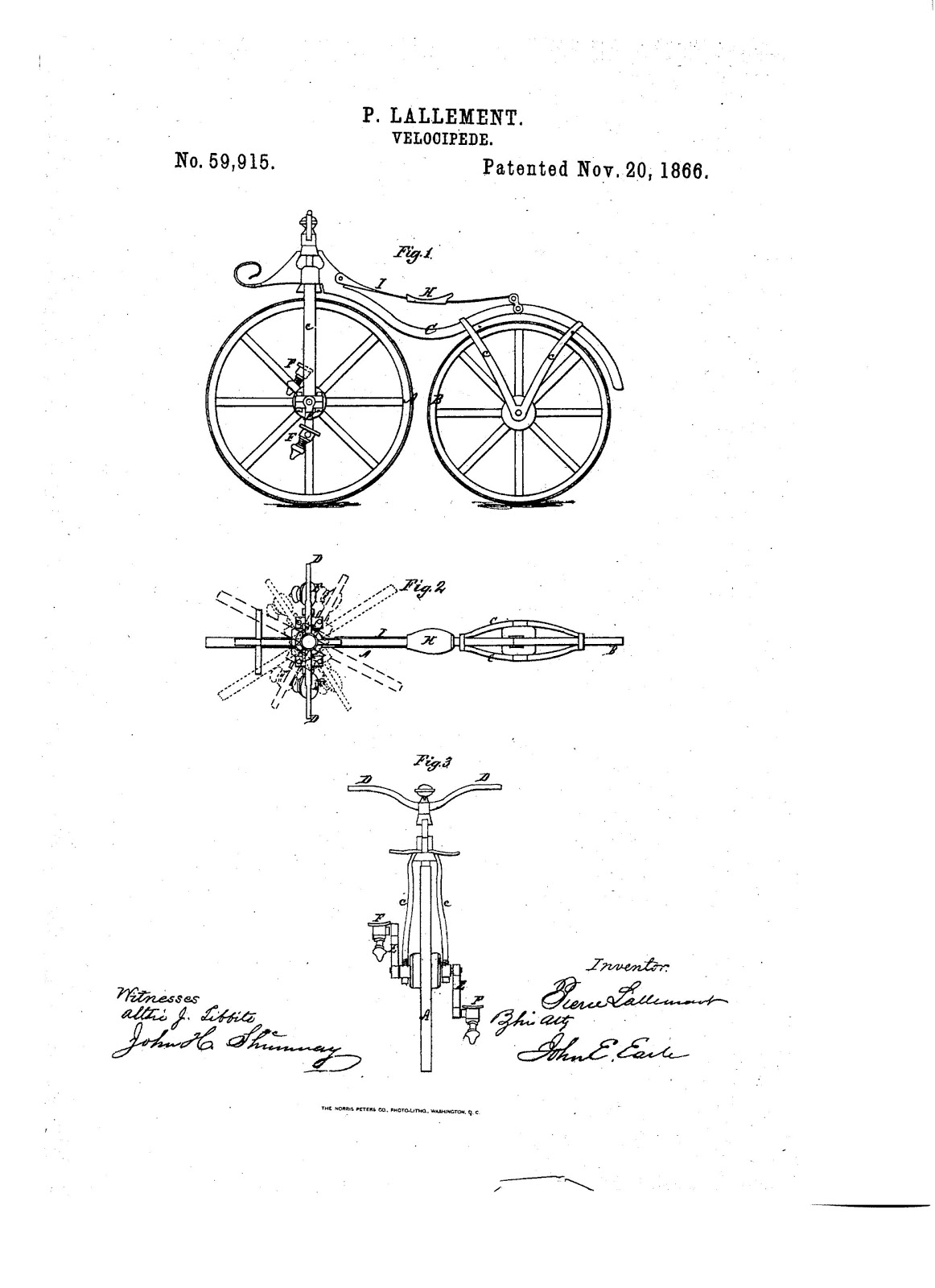
The velocipede consists of a frame having a pivoting fork, two wheels, of which the front wheel pivots within the fork and has pedals, a seat and a handlebar also attached to the pivoting fork. So an example claim might read:
A two-wheeled velocipede for transportation (preamble), comprising (transition):
a frame for receiving a rear wheel, the frame having a seat mounted thereon;
a fork pivotally mounted within said frame, having a handlebar extending from its top, the fork for receiving a front wheel;
a rear wheel rotatably mounted within said frame;
a front wheel rotatably mounted within said fork, the front wheel having two pedals mounted opposite to one another
wherein the pedals are pushed to provide motive force to the front wheel, and the handlebars may be turned so that the front wheel pivots (body).
The preamble describes the invention using normal words (as velocipede was back in the day), and the transition set up the components. The word "comprising" means minimally including, so that more elements may be present than are listed here. If a list of components is exhaustive, in that any more components would prevent the invention from working, for example, As you can see, the bulk of the claim is the body which describes components, describes how they fit together, and then usually a "wherein" clause describes how the invention operates. In choosing the components to describe, what you are looking for is the minimal elements that are required to make the invention perform. Anything bonus or not strictly necessary should be left out
The entire claim language must correspond with the language used for the same components in the description. Also, elements must be introduced by an indefinite article ("a"), and thereafter referred to by a definite article ("the"). Punctuation is important - the claim is one big sentence separated by semicolons or commas; a period only appears at the end.
How to Patent provides information from a patent attorney on patenting strategies for small businesses and start-ups, including how to prepare, file and prosecute patent applications, and find help in filing a patent. This Blog aims to provide information only; nothing in this website constitutes legal advice and no client-solicitor relationship is established by viewing this website.
Showing posts with label Engfield Law Ottawa. Show all posts
Friday, August 26, 2011
Tuesday, August 23, 2011
How to file your patent with the patent office (Canadian Patent Office CIPO)
Once you have completed the patent specification, you will want to file the application with a single patent office as a priority application. Then you have one year in which to file the same patent application in all other countries in which you are seeking protection, while claiming priority to the earlier application. If you do not file in other countries by the one-year mark, you will lose rights to the invention in those countries.
To get a filing date in the Canadian Patent Office (CIPO), you will need to provide, at the time of filing:
Please note that with a small entity fee, you must also file a statement that you believe yourself to be a small entity under the Patent Rules. Here's some boilerplate:
"The applicant believes that in accordance with the Patent Rules they are entitled to pay fees at the small entity level in respect of this application and in respect of any patent issued on the basis of this application."
This is true for applications first filed in Canada, Convention Priority applications filed in Canada, originating in the US for example, and PCT National Phase entries in Canada. For completion of the application, you must also file:
The petition contains some further requirements:
To get a filing date in the Canadian Patent Office (CIPO), you will need to provide, at the time of filing:
- a request for a patent grant
- the name and address of the applicant
- the specification, and
- the appropriate filing fee ($400 for standard entity or $200 for small entity)
Please note that with a small entity fee, you must also file a statement that you believe yourself to be a small entity under the Patent Rules. Here's some boilerplate:
"The applicant believes that in accordance with the Patent Rules they are entitled to pay fees at the small entity level in respect of this application and in respect of any patent issued on the basis of this application."
This is true for applications first filed in Canada, Convention Priority applications filed in Canada, originating in the US for example, and PCT National Phase entries in Canada. For completion of the application, you must also file:
- a petition (a form can be found here)
- an abstract
- a set of claims
The petition contains some further requirements:
- a declaration that the applicant is the legal representative of the inventor, or that the applicant is the inventor,
- the small entity declaration discussed above, and
- an appointment of agent
so it's recommended that the petition is filed with the application.
That's about it. Once you have filed the specification, petition and fee, then you should receive a Filing Certificate in 4 - 8 weeks. If it's a National Phase application from a PCT, then it's helpful to include a copy of the first page of the PCT. If the format does not meet the requirements, you'll receive a request to amend the specification to comply.
Subscribe to:
Posts (Atom)
